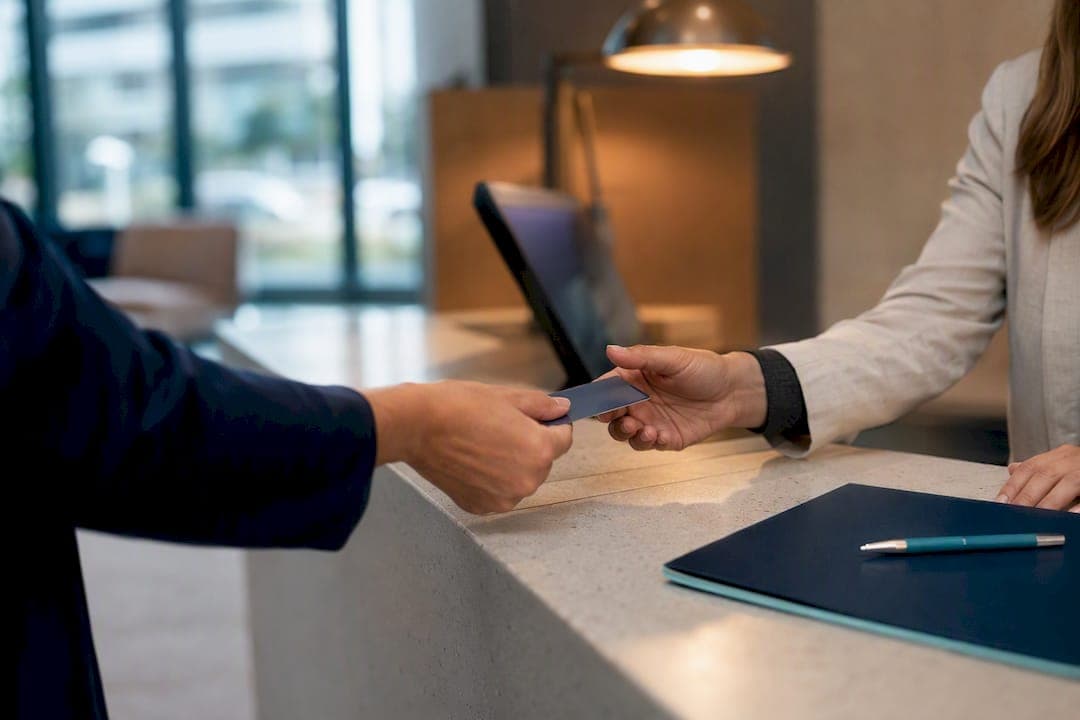
Elder fraud scams are schemes that target older adults through impersonation, romance, tech support, or investment pitches to steal money or personal data. The moment you suspect one, stop all contact with the scammer and preserve every text, email, and receipt. Then call the National Elder Fraud Hotline at 833‑FRAUD‑11 or file a report at Ic3. Those two contacts matter more than anything else in this guide.
TL;DR:
- Reporting suspected elder fraud within 24 to 72 hours is crucial for stopping losses and providing investigators with usable evidence.
- Scammers commonly use urgent threats, secrecy demands, and unusual payment requests such as gift cards or wire transfers to manipulate victims.
- The most costly scams involve investment and cryptocurrency fraud, which alone caused $4.3 billion in reported losses in 2025.
- Preventative measures include adding trusted contacts to financial accounts, activating alerts, and conducting routine device and account security checks.
- Verifying suspicious calls through independent source numbers and using official hotlines significantly reduces the risk of falling victim to scams.
Table of Contents
- Common Types of Elder Fraud Scams You'll Actually See
- Warning Signs and Red Flags to Watch For
- What to Do the Moment You Suspect an Elder Fraud Scam
- Prevention Steps Seniors and Caregivers Can Set Up Today
- Recovery Is Possible, But Limited: Financial and Legal Next Steps
- Why Trust Scruteon's Guidance on Elder Fraud
- Legal Rights and Protections for Elder Fraud Victims
- The Role Family Members and Caregivers Play in Prevention
- How Scammers Manipulate Trust to Get What They Want
- Get Ongoing Scam Alerts Before the Next One Reaches You
- Official Hotlines and Reporting Portals Worth Bookmarking
- Sources
- FAQ
Common Types of Elder Fraud Scams You'll Actually See
Scammers rotate through a handful of proven scripts, and most elder fraud cases fall into one of these buckets.
- Grandparent and emergency impostor scams. A caller claims to be a grandchild in jail, in a hospital, or in a car accident and begs for bail or medical money "before Mom finds out." The urgency and secrecy are the tell, not the story itself.
- Government impersonation. Someone posing as the IRS, Social Security Administration, or a US Marshal threatens arrest or benefit suspension unless you pay immediately, often by gift card or wire transfer.
- Tech support and remote-access scams. A pop-up warns of a virus, a "technician" calls, and within minutes they're asking to install remote-desktop software or requesting a one-time passcode. This sometimes escalates into a fake government agent taking over the call, a tag-team tactic the FTC has documented as a rising pattern.
- Romance scams. Built over weeks or months on dating apps or social media, these end with requests for money for a medical emergency, a plane ticket, or a customs fee, always paired with a reason you can't tell family.
- Investment and cryptocurrency scams. Victims are coached to convert savings into crypto or hand cash to a courier. This category alone accounted for $4.3 billion in reported losses among older victims in 2025, making it the single costliest scam type the FBI tracks.
- Medicare and medical alert scams. Fake callers offer free devices, DNA kits, or benefit "updates" in exchange for a Medicare number, then bill fraudulently.
- Recovery and advance-fee scams. After someone has already lost money, a second scammer offers to recover it for an upfront fee. There is no such service.
Warning Signs and Red Flags to Watch For
The individual scripts vary, but the psychological pressure behind them follows a predictable pattern. Watch for these signals:
- Urgency and threats. Any call demanding action "right now" or threatening arrest, deportation, or account closure is a red flag regardless of who they claim to be.
- Secrecy directives. Scammers often invoke fake gag orders or tell victims not to discuss the situation with family, sometimes framing it as a legal requirement.
- Unusual payment requests. Gift cards, wire transfers, cryptocurrency, or a courier picking up cash are never used by legitimate government agencies or banks.
- Requests for remote access or codes. No real tech company or bank will ask you to install remote software or read back a one-time passcode.
- Caller ID spoofing and shifting stories. If the number looks official but the details keep changing, that inconsistency is worth testing.
- Behavioral shifts. Sudden secrecy about finances, unexplained withdrawals, or a new "friend" who asks for money are signs worth raising with a trusted person.
Pro Tip: If a caller pressures you to stay on the line, hang up and call the agency or bank back using the number printed on your card or statement, never one the caller provides. This single habit defeats caller ID spoofing every time.
What to Do the Moment You Suspect an Elder Fraud Scam
The first 24 to 72 hours determine whether losses can be stopped and whether investigators have anything to work with. Act in this order:
- Cut contact immediately. Do not respond to another call, text, or email from the suspected scammer.
- Preserve everything. Screenshot texts, save voicemails, log call times, and keep receipts or wire confirmations.
- Call your bank or card issuer and ask about a fraud hold, a wire recall, or a dispute, even if you think it's too late.
- Report it. File with IC3.gov, the FBI's internet crime portal, and with the Reportfraud. Then call the National Elder Fraud Hotline at 833‑FRAUD‑11 for case management help walking through the process, as outlined by the Office for Victims of Crime.
- File a local police report. Include dates, dollar amounts, payment methods, and any phone numbers or emails involved. Investigators and insurers both rely on this paper trail.
- Loop in adult protective services or an attorney if the loss is large, repeated, or involves a caregiver or relative.
- Activate trusted-contact or account-freeze options with your bank if you haven't already set them up.
Our U.S. playbook for reporting elder fraud walks through this exact sequence with scripts for each call.
Prevention Steps Seniors and Caregivers Can Set Up Today
Most successful scams exploit a gap that a five-minute setup could have closed. Start with these:
- Add a trusted contact to every bank and brokerage account. This lets the institution alert a family member if activity looks unusual, without giving that person account access.
- Turn on transaction and low-balance alerts so any withdrawal over a set amount triggers a text or email instantly.
- Never call back on a number the caller gives you. Look up the agency or bank independently and dial that number yourself.
- Require two-person approval for large transfers and keep a separate, smaller account for everyday spending so a compromised card doesn't expose everything.
- Keep devices updated, avoid installing remote-desktop software from unsolicited calls, and use multifactor authentication with unique passwords for financial accounts, as the Consumer Financial Protection Bureau recommends.
- Schedule a short monthly statement review with a trusted family member, framed as routine, not suspicious.
Our Medicare scam guide and warning-signs checklist both include quick scripts for verifying suspicious calls before money moves.
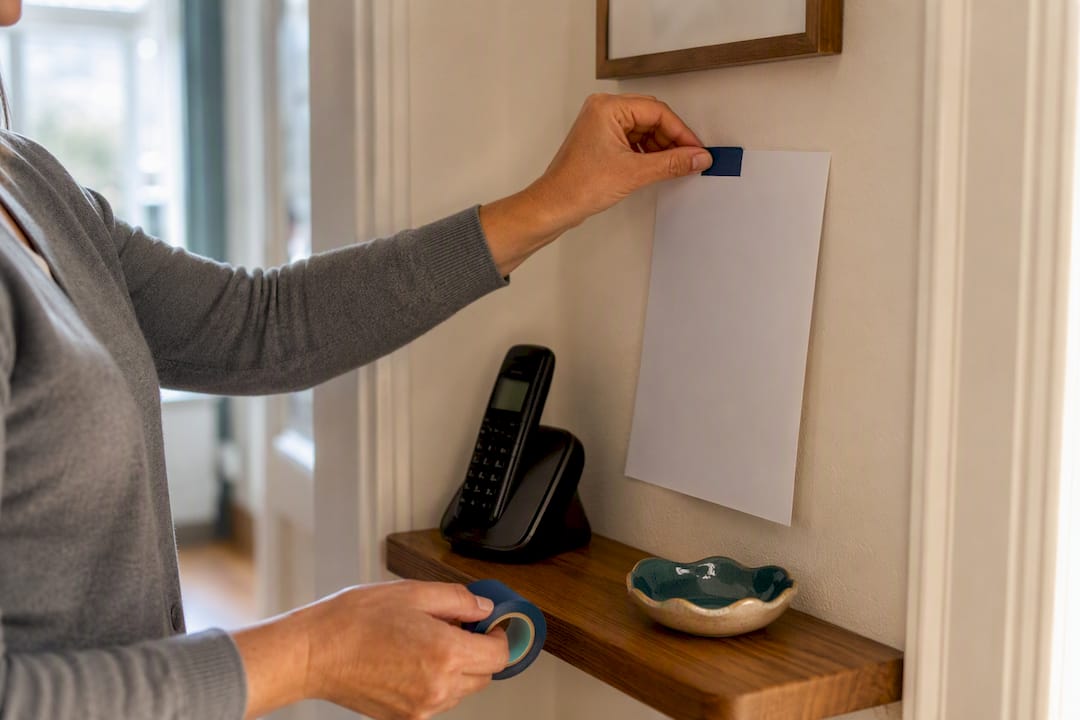
Pro Tip: Print a one-page "verify before you pay" checklist and tape it near the phone. In the panic of an urgent call, having a physical reminder beats relying on memory.
Recovery Is Possible, But Limited: Financial and Legal Next Steps
Banks and card networks can sometimes reverse wire transfers or dispute card charges, but success drops sharply once funds cross into gift cards, cryptocurrency, or cash couriers, which are built to be untraceable. A police report and an IC3 complaint still matter even when money can't be clawed back, because they feed into FBI case-building and can support insurance claims or tax-loss documentation. For repeated exploitation, especially involving a caregiver or family member, adult protective services or an elder-law attorney can pursue guardianship or restitution routes. Keep every document: wire confirmations, emails, and the police report number. The realistic goal after a loss is almost always stopping further damage first and pursuing recovery second.
Why Trust Scruteon's Guidance on Elder Fraud
This newsletter publishes one to two free scam alerts a week, breaking down real, current schemes in plain language for readers with no cybersecurity background. Our U.S. playbook to report elder fraud and caregiver playbook for medical alert scams turn official guidance from the FBI, FTC, and IC3 into short, actionable checklists. This guide is maintained by Winston, Scruteon's lead writer on fraud prevention, with editorial review against current FBI and FTC advisories. Static guides like this one cover the fundamentals; Scruteon's newsletter fills in the fast-moving details as new scam scripts emerge.
Legal Rights and Protections for Elder Fraud Victims
Every state has some form of elder abuse statute that covers financial exploitation, and most define it broadly enough to include scams carried out by strangers, not just caregivers or relatives. Victims generally have the right to file a police report regardless of the dollar amount lost, and law enforcement is required to take that report even when recovery seems unlikely. Adult protective services agencies exist specifically to investigate suspected financial exploitation of vulnerable adults, and they can intervene even without a criminal conviction. Federal protections layer on top: the FTC's consumer complaint system creates an official record that can support restitution efforts if the perpetrator is eventually prosecuted. Some victims also have grounds for civil claims against a scammer, though collecting a judgment from someone using a fake identity is rarely realistic. Where legal rights matter more is prevention. Powers of attorney, revocable trusts, and joint account structures can build in oversight, but they need safeguards against misuse by the very person holding that authority. An elder-law attorney can structure these protections so a trusted contact has visibility without full control, which limits exposure on both ends.
The Role Family Members and Caregivers Play in Prevention
Family involvement is one of the most consistently effective defenses against elder fraud, mainly because scammers depend on isolation to succeed. A scam script that demands secrecy falls apart the moment a victim mentions it to an adult child or a sibling, which is exactly why fraudsters invoke fake gag orders in the first place. Caregivers don't need account access to make a difference. Being listed as a trusted contact at a bank, checking in regularly about unusual calls or new "friends," and normalizing conversations about money without judgment all lower the odds of a scam succeeding. The tone of that conversation matters. Framing it as "let's set this up together" rather than "I don't trust you to manage this" keeps an older adult engaged instead of defensive, which matters because shame and embarrassment are two of the biggest reasons victims delay reporting a loss. When an older adult resists help or gets defensive about finances, that resistance itself is worth taking seriously rather than dropping the subject; our caregiving partners at Tucson Senior Home Services cover practical ways to navigate that pushback without damaging trust. Regular, low-key check-ins beat a single dramatic intervention every time.
How Scammers Manipulate Trust to Get What They Want
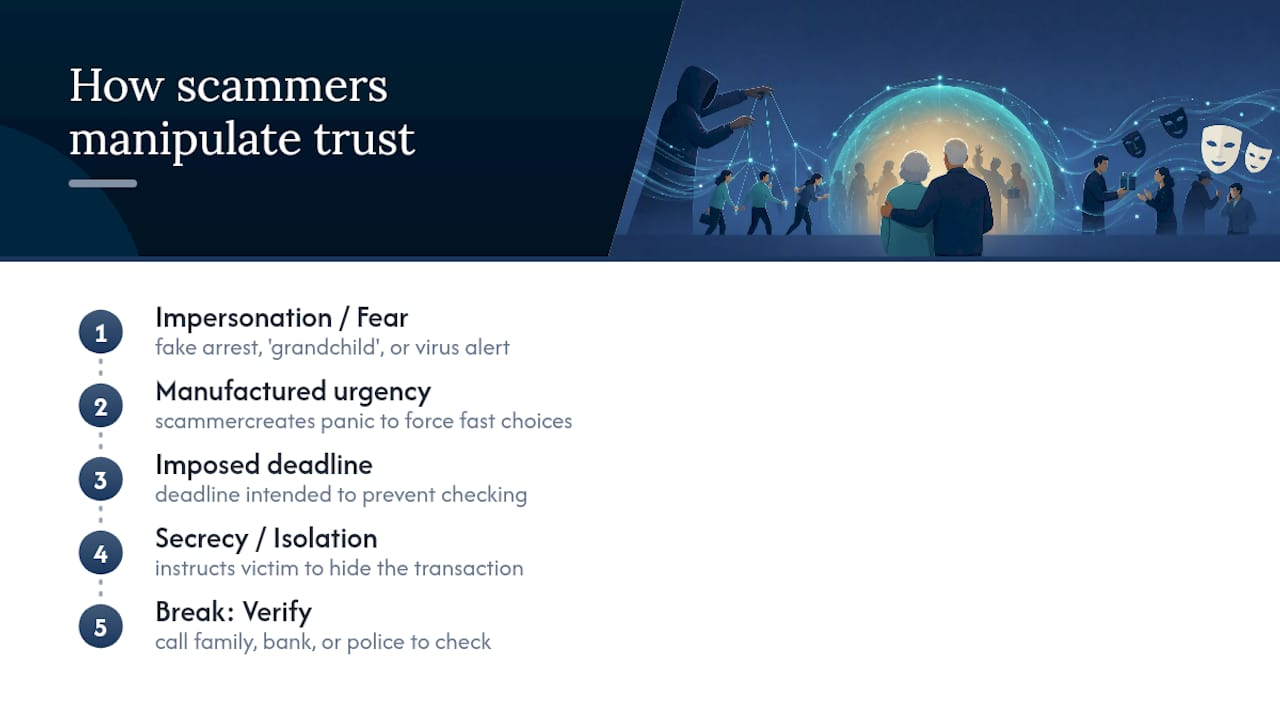
Every elder fraud scam runs on the same psychological engine: manufacture urgency, then cut off the victim's ability to verify. Fear is the fastest lever, whether it's a fake arrest warrant, a "grandchild in jail," or a virus alert flashing on a screen. Once fear is established, scammers introduce a deadline, because a rushed decision skips the step where a victim might call someone else to check the story. The FBI has noted that politeness and a lifetime habit of trusting authority figures make older adults particularly susceptible to impersonation scripts, not because of any deficit, but because those social instincts are exactly what scammers are trained to exploit. Secrecy is the third piece, and it's the most telling one: no legitimate bank, government agency, or law enforcement officer will ever instruct someone to hide a transaction from their family. Research on aging and financial deception confirms that older adults face disproportionately large monetary losses partly because these tactics target genuine social and cognitive vulnerabilities rather than gullibility. Recognizing the pattern, urgency, then isolation, then a demand, matters more than memorizing every scam script, because new versions of the same three-step formula appear constantly.
Get Ongoing Scam Alerts Before the Next One Reaches You
Scam scripts change faster than any single guide can track, which is exactly the gap Scruteon's newsletter fills.

Subscribing gets you one to two short, plain-language emails a week covering whatever scam is actively circulating, whether that's a new Medicare card scheme or a fresh twist on the grandparent call. No cybersecurity background required, and it's free to join through the Scruteon guide. If you're staring at a suspicious text or a call that felt off and want a second opinion before you act, use the Ask for Free Advice page to get a quick read on whether it's a scam. That single question, asked before money moves, is often the difference between a close call and a real loss.
Official Hotlines and Reporting Portals Worth Bookmarking
Save these before you need them:
- National Elder Fraud Hotline: 833‑FRAUD‑11, staffed with case managers who walk victims through reporting.
- Ic3: the FBI's portal for reporting internet-enabled fraud.
- Reportfraud: the FTC's complaint and consumer-education portal.
- CFPB and NCOA: additional consumer protection resources for older adults and caregivers.
Sources
- Scammers target older adult victims
- Elder Fraud — IC3
- National Elder Fraud Hotline | Office for Victims of Crime
- Reportfraud
FAQ
What Are Some of the Most Current Scams Targeting Seniors?
Cryptocurrency investment scams are currently the costliest, accounting for $4.3 billion in losses to older victims in 2025. Tech support scams that escalate into fake government agents, AI-generated voice clones used in grandparent scams, and Medicare benefit scams round out the list of active threats.
What Are the Top Scams Targeting Older Adults?
The most common categories are investment and cryptocurrency fraud, government impersonation, tech support scams, romance scams, and grandparent or emergency impostor calls. Medicare and medical alert scams, along with advance-fee recovery scams, also appear frequently in FBI and FTC complaint data.
What Are Some Real Examples of Elder Fraud?
One common example involves a caller posing as the IRS threatening arrest unless back taxes are paid immediately via gift card. Another is a romance scam built over months on a dating app that ends with an urgent request for money for a medical emergency or travel costs, both patterns confirmed in FBI reporting on elder fraud.
What Should I Do if Someone Is Scamming an Elderly Person?
Stop all contact with the scammer immediately and preserve any texts, emails, or call logs as evidence. Contact the bank to request a fraud hold, then report the incident to IC3.gov and call the National Elder Fraud Hotline at 833‑FRAUD‑11 for guidance through the reporting process.
Can Scruteon Help Me Verify a Suspicious Call or Message?
Yes. Scruteon's free advice page lets you describe a suspicious call, text, or email and get a quick read on whether it matches a known scam pattern, at no cost.
Recommended
- U.S. Caregiver Playbook: 5 Red Flags of Medical Alert Scams
- 7 Numbers Seniors & Caregivers Must Save to Stop Medicare Scam Calls
- Spot Scam Warning Signs in 5 Minutes, Verify and Report (U.S.)
The information in this AI-assisted-generated article is for educational purposes. Scam tactics change fast, and we cannot guarantee that this information is always complete or up to date.
By reading this article, you agree that Scruteon is not responsible for any financial losses, fraud, or damages that occur if you rely on this content. This is not professional financial or legal advice. If you suspect you are a victim of a scam, please contact your bank or local law enforcement immediately.