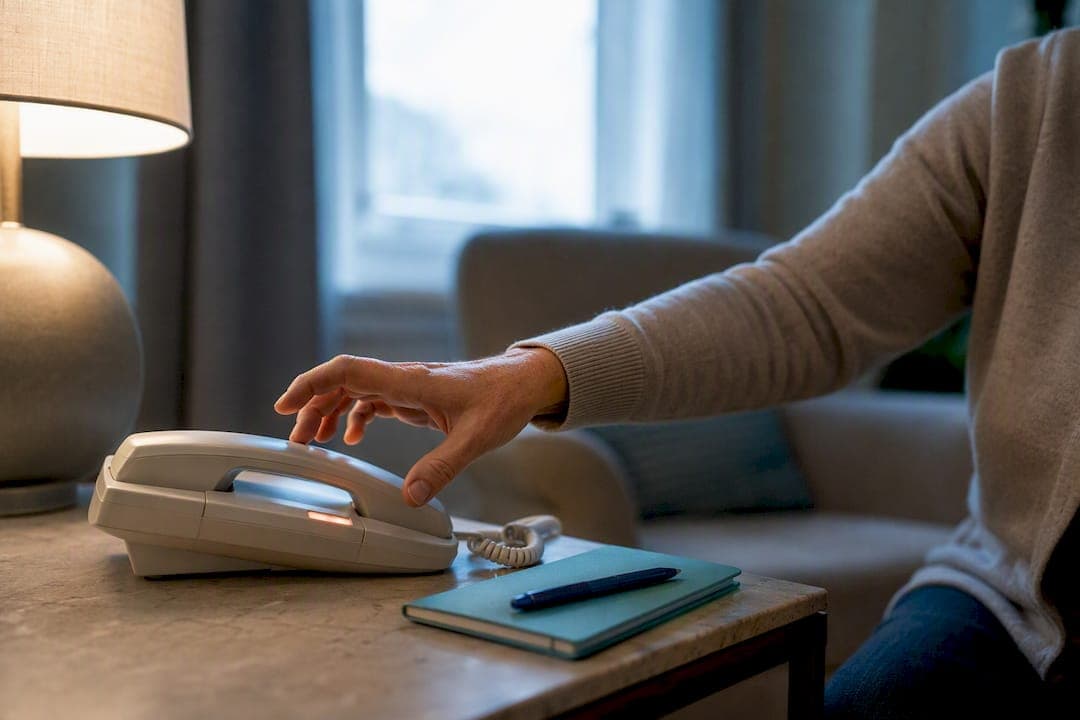
If you get an unsolicited call, text, or knock at the door offering a "free" medical alert device, treat it as a probable scam. Hang up or close the door and never give your name, address, Medicare number, Social Security number, or payment details to anyone who contacts you first. If you already shared information, call your bank immediately and report the incident to federal and state fraud authorities before doing anything else.
TL;DR:
- Always verify the legitimacy of medical alert offers by contacting the provider directly through official channels, not the number or contact info provided in unsolicited calls or visits.
- Be cautious of requests for prepaid gift cards, full Social Security, or bank account numbers over the phone, as these are common scam indicators.
- Acting quickly by reporting any suspected scam and freezing bank accounts can prevent ongoing financial losses and reduce the risk of identity theft.
- Scammers often target seniors by exploiting their trust, familiarity with health concerns, and data purchased from lists, making verification crucial before sharing personal information.
- Keeping verified provider contact information accessible and consulting independent sources can prevent falling victim to the recurring and increasingly sophisticated medical alert scams.
Table of Contents
- How the Medical Alert Scam Works: Tactics You'll Hear or See
- Red Flags That Should End the Call Immediately
- What to Do Right Now if You Were Targeted
- How to Verify a Legitimate Medical Alert Offer
- Prevention Checklist for Seniors, Families, and Caregivers
- What These Scams Actually Cost Victims
- Real Cases That Show How These Scams Play Out
- Why Seniors Get Targeted and How Scammers Find Them
- Get Ahead of the Next Scam Attempt With Scruteon
- Where to Report a Medical Alert Scam
- Sources
- FAQ
How the Medical Alert Scam Works: Tactics You'll Hear or See
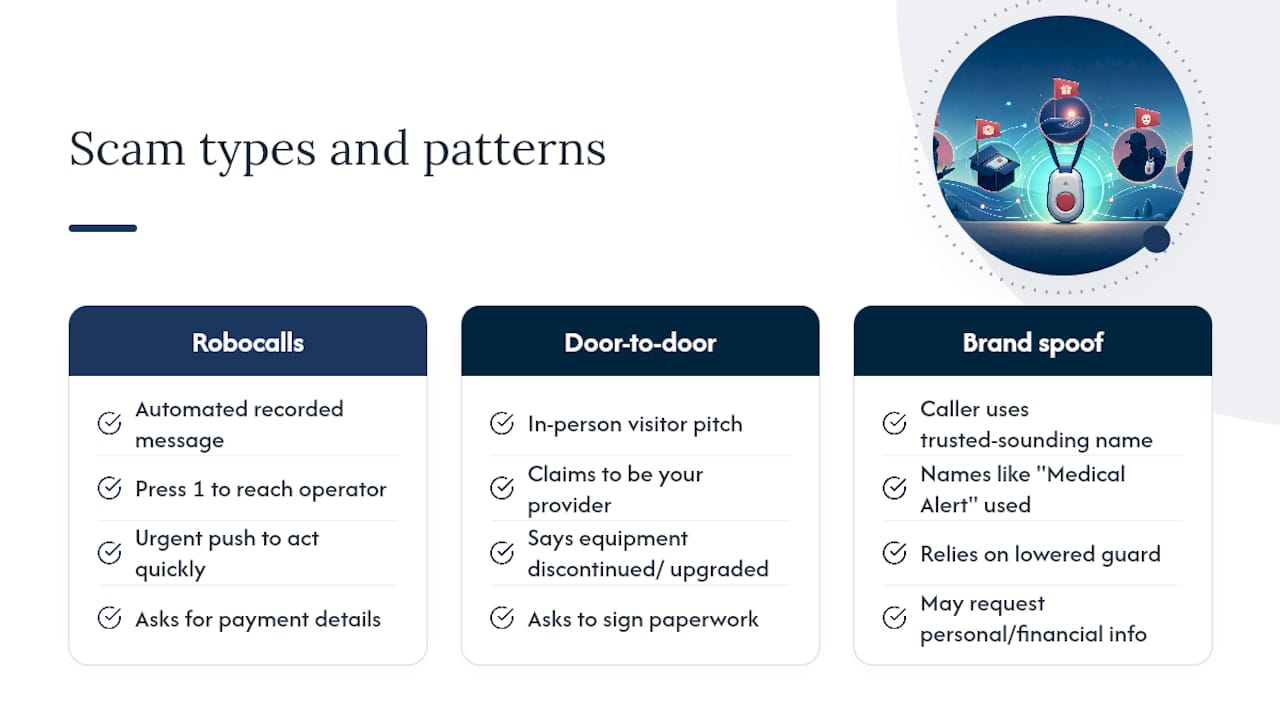
Most medical alert scams start with a recorded voice, not a person. The call announces a "free" medical alert system, tells you a family member already paid for it, or claims Medicare covers the device, then instructs you to press 1 to speak with a representative. That representative is the scam. Their entire job is to keep you on the line long enough to extract a card number or a Social Security digit.
Caller ID spoofing makes this worse. A scammer can make the display show a local area code or even mimic the name of a real company, so the call looks like it's coming from your town or a business you already trust. State attorney general offices, including Georgia's Consumer Protection Division, have documented this exact robocall pattern for years.
Common versions of the pitch include:
- A recording claims your device is "free" but reveals a monthly monitoring fee only after you provide payment information.
- The caller says a relative already purchased the unit as a gift and just needs you to "confirm" your address and card number.
- A door-to-door visitor claims to represent your current alert provider and says your equipment needs an "upgrade," pressuring you to sign a new contract on the spot.
- The script references Medicare eligibility to sound official, even though Medicare does not call people to sell medical alert devices.
The outcomes are predictable: recurring charges on a card you didn't expect to use, a stolen identity, or, in many cases, no device ever arrives at all.
Red Flags That Should End the Call Immediately
Certain phrases and pressure tactics show up in nearly every version of this scam. Learning to spot them in the first ten seconds saves you the rest of the conversation.
- Any request for a prepaid gift card, wire transfer, or cash payment. Legitimate medical alert companies bill through standard credit card or bank draft, not gift cards. Prepaid cards are a favorite because they're nearly impossible to trace or reverse once the funds are loaded, according to Consumer Action.
- A request for your Medicare number, Social Security number, or full bank account number over the phone. No legitimate provider needs your Social Security number to ship a device.
- Pressure to decide or press a key right now. Real companies let you think it over, request a callback number, or mail you written materials.
- Claims that a family member "already paid" for your device. Scammers use this line specifically to lower your guard. Verify it directly with that relative before doing anything else.
- An unannounced visitor claiming your provider "switched" or your equipment needs replacing. This is one of the most common door-to-door variations and almost always ends in a rushed signature.
If you hear even one of these, the conversation is over. Hang up or ask the visitor to leave.
What to Do Right Now if You Were Targeted
Speed matters here. The faster you act, the more options you have to limit the damage.
- Hang up first, then write down whatever details you can recall: the phone number, the company name used, and the approximate time of the call.
- If your caller ID recorded the number, save a screenshot. Voicemails should stay saved, not deleted, since they can serve as evidence.
- If you gave out a card or bank account number, call your bank or card issuer immediately to freeze the account or dispute pending charges. Most banks have a 24-hour fraud line printed on the back of your card.
- If you gave out a Medicare number or Social Security number, contact Medicare directly and request fraud monitoring. Medicare's own guidance on protecting yourself from fraud walks through exactly what to say when you call.
- File a complaint at Reportfraud, which routes your report to the right federal investigators, and separately notify your state Attorney General's consumer protection office.
- For repeated robocalls or spoofed numbers, the FCC consumer complaint portal is the right channel.
Consumers who lose money to a phone scam often recover nothing once cash or gift card payments are involved, which is exactly why prepaid cards remain the scammer's payment method of choice. Bring in a trusted family member or caregiver at this stage if you're feeling rattled. Two sets of eyes on the dates, numbers, and documentation make a stronger complaint and a calmer process.
How to Verify a Legitimate Medical Alert Offer
Before you say yes to anything, verify it independently. This takes five extra minutes and eliminates almost every scam scenario.
- Never call the number the caller or visitor gives you. Look up your provider's number on a past billing statement or their official website instead.
- Ask for written materials by mail, including the full company name, a physical mailing address, and the device's model number. A legitimate company has no problem sending this.
- If someone claims a relative bought you the device as a gift, call that relative directly before sharing any information.
- Learn what real providers never ask for over an unsolicited call: your Social Security number, your full bank account number, or a prepaid card payment. Legitimate providers like MedicAlert Foundation publicly warn that scammers frequently borrow trusted brand names, including close variations of "Medical Alert," specifically to sound official.
- If someone shows up at your door, ask for photo ID and a business card, then tell them you need time to verify before signing anything. A legitimate representative will not object to that delay.
Pro Tip: Keep a copy of your actual medical alert provider's customer service number taped inside a kitchen cabinet or saved as a contact labeled "Medical Alert, Real Number." That way, if you're ever unsure whether a call is genuine, you can hang up and check in ten seconds instead of guessing.
Prevention Checklist for Seniors, Families, and Caregivers
The best defense against a medical alert scam is a routine you don't have to think hard about in the moment.
- Register your phone number with the National Do Not Call Registry and turn on your carrier's call-blocking or spam-labeling feature.
- Keep a written list of official provider and emergency numbers somewhere visible, like next to the phone or on the refrigerator.
- Practice the "hang up, verify, ask family" rule out loud with an older parent or relative until it becomes automatic.
- Never agree to pay with a prepaid card or wire transfer for any unsolicited offer, no matter how urgent it sounds.
- Set up account alerts through your bank so you're notified by text the moment an unfamiliar charge posts.
- Designate one trusted family member or caregiver whose job is reviewing unusual mail, charges, or calls.
Saving verified numbers in advance matters more than most families realize. A list of numbers to save before a scam call ever comes in gives you something concrete to check against, instead of scrambling mid conversation.
What These Scams Actually Cost Victims
The financial damage from a medical alert scam rarely stops at one bad transaction. Once a scammer has a working card number, they typically run repeated small charges disguised as "monthly monitoring fees," hoping the victim won't notice or won't want to deal with the hassle of disputing a $30 or $40 line item. Those charges can continue for months before anyone catches them, especially if the senior isn't checking statements closely or a caregiver only reviews finances occasionally.
The personal information loss is often more damaging than the money. A Social Security number or Medicare number handed over during one of these calls doesn't just enable a single fraudulent charge. It can be resold or used to open new lines of credit, file fraudulent tax returns, or submit fake Medicare claims under the victim's identity, a process that can take months of paperwork to unwind. Medicare fraud committed with a stolen number can also distort a person's actual medical record, since fraudulent claims sometimes list procedures or equipment the real patient never received.
There's also a quieter cost: trust. Many seniors who fall for one of these calls become reluctant to answer their phone at all afterward, or feel embarrassed telling family what happened, which delays reporting and recovery. That hesitation is exactly what scammers count on. The faster a victim or their family reports the incident, the more options remain for freezing accounts, disputing charges, and limiting how far a stolen identity travels.
Real Cases That Show How These Scams Play Out
State attorney general offices have documented consistent patterns rather than isolated incidents, which is part of why these scams work at scale. Georgia's Consumer Protection Division has tracked waves of robocalls specifically pitching "free" medical alert devices to residents, with the recorded message directing them to press a key to reach a live operator who requests payment details. The pattern repeats closely enough across states that consumer protection offices, including Minnesota's Attorney General, publish near identical warnings describing the same press 1 setup, the same urgency, and the same request for financial or personal information.
Door-to-door versions follow a different script but a similar outcome. A visitor claims to represent the resident's existing provider, states that the current equipment is being discontinued or upgraded, and produces paperwork designed to look like a routine service form. Residents who sign without calling their actual provider first often discover weeks later that they've agreed to a new contract, a new monthly fee, or both, tied to a company they never actually chose.
Brand impersonation shows up in a lot of these cases too. Scammers deliberately use names that sound like established, trusted organizations, banking on the fact that a name resembling "Medical Alert" or "MedicAlert" will lower a listener's guard before they've had a chance to think it through. That's precisely why MedicAlert Foundation itself issues public warnings telling consumers to verify any call claiming to represent them through an independently sourced number, not the one the caller provides.
Why Seniors Get Targeted and How Scammers Find Them
Scammers don't call randomly. Lists of phone numbers, ages, and even health interests get bought and sold through data brokers, sometimes originating from sweepstakes entries, warranty cards, or health related surveys a senior filled out years earlier without realizing where that information would end up. Once a number lands on one of these lists, it often gets shared or resold repeatedly, which is why a single response to a scam call frequently leads to a noticeable jump in follow-up calls in the following weeks.
Seniors get targeted specifically because scammers assume, often correctly, that this demographic is more likely to live alone, more likely to value the safety promise a medical alert device offers, and sometimes less familiar with caller ID spoofing or robocall technology than younger relatives. Cognitive changes that come with age can also make it harder to spot manipulation tactics in the moment, even for people who would normally recognize a scam.
Family conversations mentioned on social media or public obituaries can unintentionally hand scammers more ammunition, since details about a parent's recent hospital stay or a spouse's passing give a caller a convincing hook, like claiming the device was already paid for as a gift. Robocall systems also dial exchanges sequentially or use auto dialers that don't discriminate. Age isn't always known in advance. But once a senior answers and engages even briefly, that number gets flagged as a "live," responsive line and gets targeted more aggressively going forward.
Get Ahead of the Next Scam Attempt With Scruteon
Reading about one scam pattern is useful. Having somewhere to check the next suspicious call before you respond is what actually keeps you safe long term.
Scruteon publishes a free Scam Prevention Guide covering exactly this kind of fraud, written in plain language without technical jargon, so you can recognize a scam the moment it starts, not after the damage is done. If you get a call or letter that doesn't feel right, you can reach out through Scruteon's Ask for Free Advice channel and get a straight answer on whether it looks legitimate before you respond to anyone. Scruteon isn't a device seller and has no product to push. It's a free, independent resource built to help everyday people, including seniors and the family members looking out for them, avoid exactly the kind of pressure tactics covered above. Subscribing to the Scruteon newsletter gets you one or two short emails a week flagging real scams as they're happening, so you're hearing about the next robocall wave before it reaches your phone, not after. Start by visiting Scruteon's guide and bookmarking the advice page for the next time something feels off.
Where to Report a Medical Alert Scam
File a report with reportfraud.ftc.gov for telemarketing and identity fraud, contact Medicare directly for anything involving your Medicare number, and reach out to your state Attorney General's consumer protection office for local enforcement action. Gather your notes, call logs, and any screenshots before you start, since a documented timeline makes every one of these complaints faster to process.
This article is general information, not a substitute for advice from a qualified financial advisor. Consult a qualified financial professional about your own circumstances before acting on anything here.
Sources
- Consumer Alert | MedicAlert Foundation
- Medicare
- ReportFraud (FTC)
- Protect yourself from medical alert scams (Minnesota Attorney General)
FAQ
Is there a scam that offers free medical alert devices?
Yes. Robocalls and door-to-door pitches offering a "free" medical alert device are a well-documented scam pattern tracked by multiple state attorney general offices, and the "free" device typically comes with hidden fees or is never delivered at all.
Is Medical Alert a legitimate company?
Legitimate medical alert companies do exist, but scammers frequently use similar-sounding names, including close variations of "Medical Alert" or "MedicAlert," to borrow that trust. Always verify a company's identity using a phone number from your own billing statement or their official website, never the number given during an unsolicited call.
Is there a Medicare scam going around right now?
Medicare-related scams involving medical alert devices are ongoing and recurring, often using scripts that falsely claim Medicare covers or paid for the device. Medicare never calls beneficiaries to sell medical equipment, so any such call should be treated as fraudulent.
What are the latest scam alerts?
State attorney general offices post updated consumer alerts as new scam patterns emerge in their states, and Scruteon's newsletter summarizes current scam trends, including medical alert fraud, in short weekly emails.
Recommended
- Spot Scam Warning Signs in 5 Minutes, Verify and Report (U.S.)
- 7 Ways Seniors and Caregivers Stop Medicare Scams: Hotlines & Scruteon
- 7 Numbers Seniors & Caregivers Must Save to Stop Medicare Scam Calls
The information in this AI-assisted-generated article is for educational purposes. Scam tactics change fast, and we cannot guarantee that this information is always complete or up to date.
By reading this article, you agree that Scruteon is not responsible for any financial losses, fraud, or damages that occur if you rely on this content. This is not professional financial or legal advice. If you suspect you are a victim of a scam, please contact your bank or local law enforcement immediately.