
No. Any text claiming to be from the DMV that demands payment, threatens license suspension, or pressures you to click a link is a scam. State motor vehicle agencies do not text drivers demanding money. If you get one, don't click, don't reply, and verify by typing your state's official .gov DMV website into your browser yourself.
TL;DR:
- Most DMV scam texts claim urgent license suspension or fines but use non-.gov links and contain grammar errors or misspelled agency names.
- Scammers spoof sender IDs, often send messages from random numbers, and mass-target thousands with identical templates that state false deadlines like 24 hours.
- To verify, avoid clicking links or calling numbers in the message; instead, type your official DMV .gov URL directly into your browser and check for outstanding issues there.
- If you accidentally engage with a scam, promptly change passwords, dispute charges, and file fraud or police reports to minimize damage.
- Reporting suspicious texts to your wireless carrier, the FTC, FBI, or your state DMV helps shut down ongoing campaigns and protects other users.
Table of Contents
- What a DMV Text Scam Looks Like
- Why These Text Scams Keep Working
- How Do You Verify a Suspicious DMV Text?
- What to Do if You Already Clicked, Paid, or Entered Information
- Where to Report a Fake DMV Text
- How Scruteon Helps You Stay Ahead of DMV Scam Texts
- Sources
- FAQ
What a DMV Text Scam Looks Like
These messages follow a script. Scammers borrow the DMV's name and logo, then lean on fear to get you moving before you think it through.
Watch for these patterns, all pulled from real alerts state DMVs have published:
- A threat that your license will be "suspended" or "revoked" very soon unless you pay immediately.
- A link to a web address that looks close to official but doesn't end in .gov, sometimes something like "dmv-gov-payment.com."
- A text from a random 10 or 11 digit number, not a short code a real agency would use.
- Grammar that's slightly off, or the agency name written incorrectly, like "Department of Motorized Vehicle."
Sample phrasing the New York State DMV has published includes lines like "Your driver's license is due for immediate suspension" and "final notice: outstanding toll violation, pay now to avoid legal action." The Texas DMV flagged near-identical wording in its own 2026 bulletin, which tells you these aren't one-off scams. They're templates, reused across states and swapped out with a new agency name.
Why These Text Scams Keep Working
Smishing is the term for phishing carried out by text instead of email, and it works differently than an inbox scam; recent industry coverage and examples of SMS fraud provide useful insights into detection trends. A text lands on the one device most people check within minutes, and that speed is the whole point. Scammers spoof sender IDs so the message looks like it came from a short code, then push you toward a fake portal built to mirror a real state DMV site closely enough to fool a quick glance.
These campaigns roll out in waves. New York's DMV has described "barrages" of near-identical texts hitting thousands of residents within days, which is why one random text landing in your inbox is rarely personal. It's mass-targeted, and ignoring it is usually the safer move than engaging with it at all.
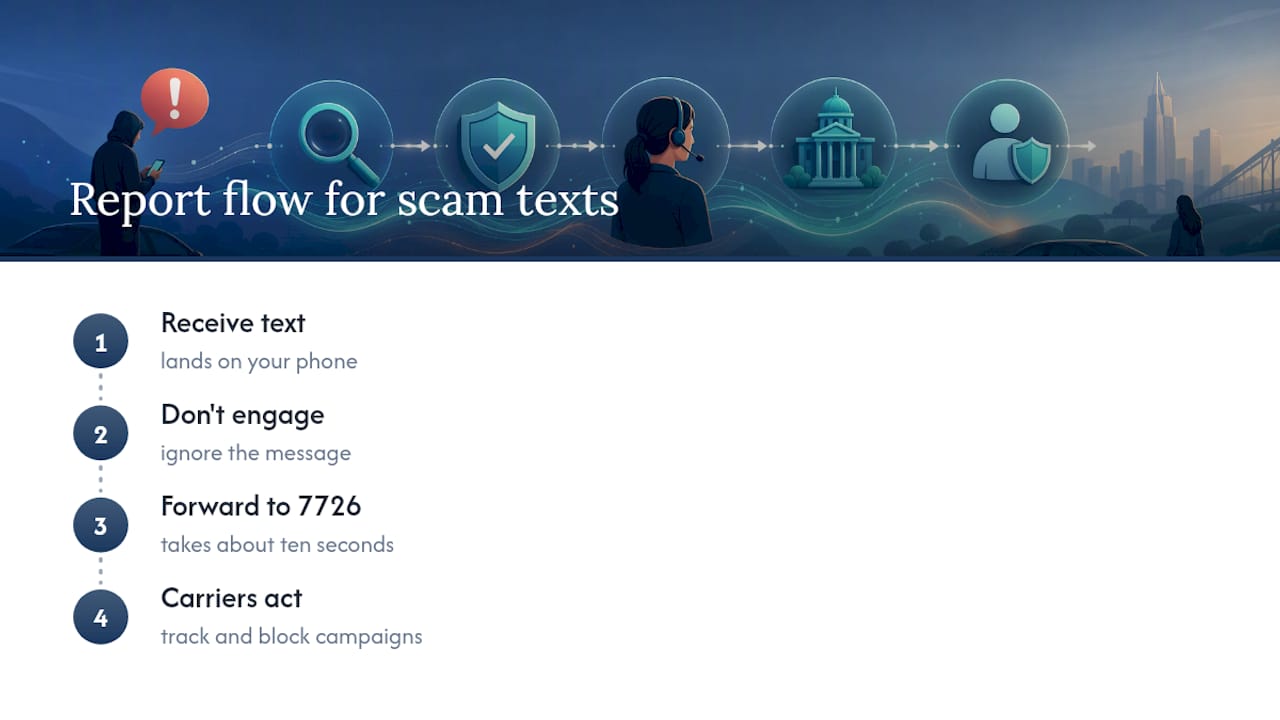
Pro Tip: Forward any suspicious text to 7726 (spells "SPAM" on your keypad). Major U.S. carriers use that short code to track and block scam campaigns, and it takes about ten seconds.
How Do You Verify a Suspicious DMV Text?
Never use the link or the phone number sitting inside the suspicious message. Scammers control both. Instead, work backward through official channels only.
- Stop before you tap anything. Don't click the link, don't call the number, don't reply, even to say "stop."
- Open a new browser tab and type your state DMV's web address yourself. Look for a URL ending in .gov, such as dmv.ny.gov, dmv.ca.gov, dmv.colorado.gov, or dmv.virginia.gov. A tool that checks link safety can help you inspect a URL before you ever click, if you're unsure.
- Log in to your account or search for outstanding tickets directly on that official site. If nothing shows up there, the text is fake.
- Call the phone number listed on the official .gov site, not the one in the text, if you want to confirm by phone.
- Check the message itself for tells: non.gov links, odd grammar, an unrealistic 24 hour deadline, or a misspelled agency name.
- Forward the text to 7726, then block and delete the sender on your phone.
What to Do if You Already Clicked, Paid, or Entered Information
If you tapped the link and things moved fast after that, act just as fast in the other direction. Every hour matters here.
- Stop interacting with the site or sender immediately and close the browser tab.
- Change the password on any account where you reused that password, and turn on multi-factor authentication wherever it's offered.
- Call your bank or credit card company to dispute any charge and freeze the card if you entered payment details.
- Place a fraud alert or credit freeze with the three major credit bureaus, and file a report at Identitytheft if you shared your Social Security number or license information.
- Contact your state DMV directly through its verified phone line if driver's license data was exposed, and file a police report if the exposure is serious.
Where to Report a Fake DMV Text
Reporting does two things: it protects you and it helps investigators shut the campaign down faster. State DMVs, the FTC, and the FBI all track these patterns, and your report adds to that picture.
- Your state DMV's scam-alert page. New York, California, Colorado, Virginia, and Texas all maintain dedicated pages for reporting impersonation texts.
- The FTC, at reportfraud.ftc.gov, which tracks ticket and DMV impersonation scams nationally.
- The FBI's Internet Crime Complaint Center, at ic3.gov, especially if you lost money.
- Your wireless carrier, by forwarding the text to 7726.
- Screenshots and the sender's number, saved before you delete anything, since preserving that evidence helps every agency you report to.
How Scruteon Helps You Stay Ahead of DMV Scam Texts
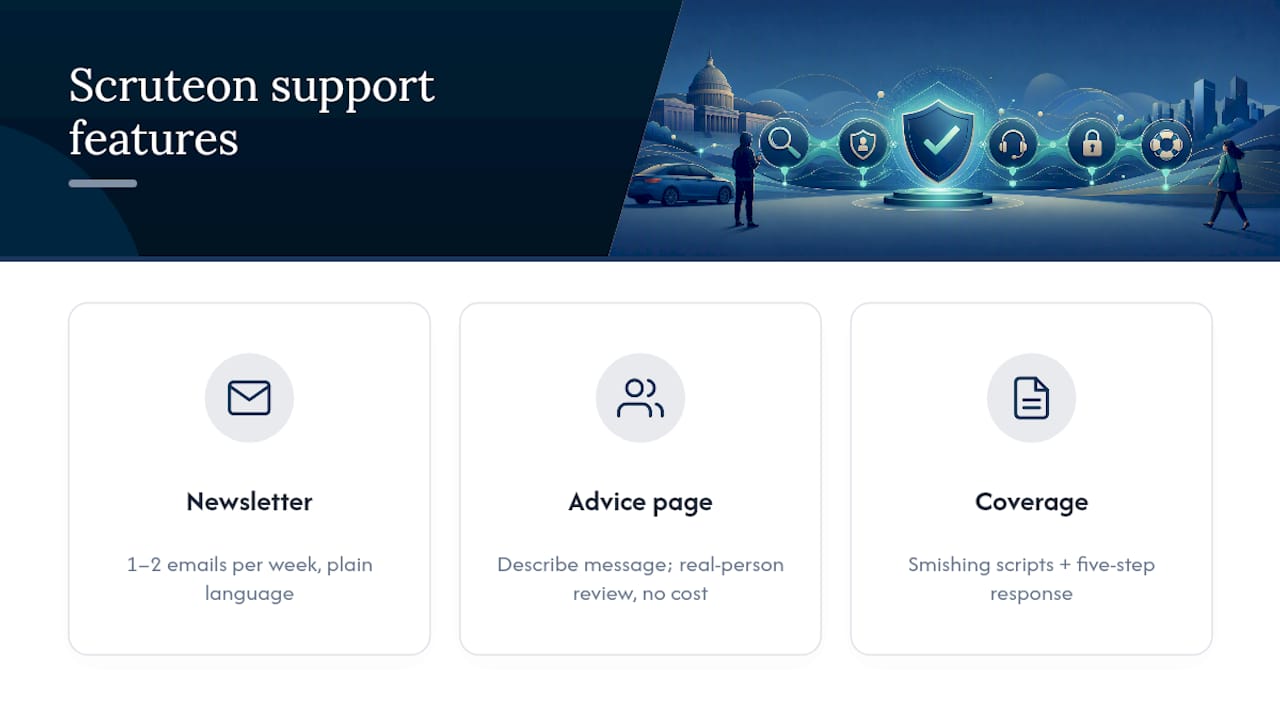
Some free newsletters track scams like this one as they evolve and break down what changed and why it matters, in plain language, one or two emails a week. Recent coverage on the smishing scripts scammers reuse across campaigns walks through the exact wording fraud text messages tend to recycle, plus a five-step response you can apply on the spot.
If a text, email, or call has you second-guessing yourself right now, you don't have to sit with that uncertainty. Scruteon's free advice page lets you describe what you got and ask a real person whether it looks legitimate, no cost, no sign-up required beyond the newsletter itself. Scruteon's free newsletter covers everything from DMV impersonation to romance scams and tech support fraud, written for readers who want clear answers without needing a cybersecurity background first.
Sources
Go straight to these pages instead of trusting anything a suspicious text tells you to visit:
- Phishing Examples | NY DMV
- Scam/Fraud Alerts | Department of Revenue - Motor Vehicle
- Fake Fines, Real Fraud TxDMV warns Texans about ongoing text scam
- That text about an overdue traffic ticket is probably a scam
FAQ
Are There Real Fake DMV Text Messages Going Around?
Yes. State DMVs in New York, California, Colorado, Virginia, and Texas have all issued warnings about waves of fraudulent texts claiming unpaid tickets or pending license suspension.
What's the Newest DMV Text Scam?
The current wave, flagged by Texas and other state DMVs in 2026, claims a driver has an unpaid violation and demands immediate payment through a link, often threatening suspension within 24 hours.
I Got a Text About a Parking Fine. Is That a Scam?
Almost certainly. Legitimate parking fines and tickets come by mail or through your municipal court, not by unsolicited text demanding instant payment through a link.
How Can I Tell if a Text Message Is Fake?
Check whether the link ends in .gov, look for grammar or agency-name errors, and be suspicious of any message with an urgent deadline. When in doubt, ignore the text and go directly to the agency's official website instead.
Recommended
- Stop Vacation Rental Scams: 24–48 Hour Checklist and 5 Step Recovery
- Spot Scam Warning Signs in 5 Minutes, Verify and Report (U.S.)
- Job Offer Scam? 6 Step Checklist for Job Seekers to Verify Offers
- 6 Smishing Scripts Phone Users Must Recognize and a 5 Step Fix
The information in this AI-assisted-generated article is for educational purposes. Scam tactics change fast, and we cannot guarantee that this information is always complete or up to date.
By reading this article, you agree that Scruteon is not responsible for any financial losses, fraud, or damages that occur if you rely on this content. This is not professional financial or legal advice. If you suspect you are a victim of a scam, please contact your bank or local law enforcement immediately.