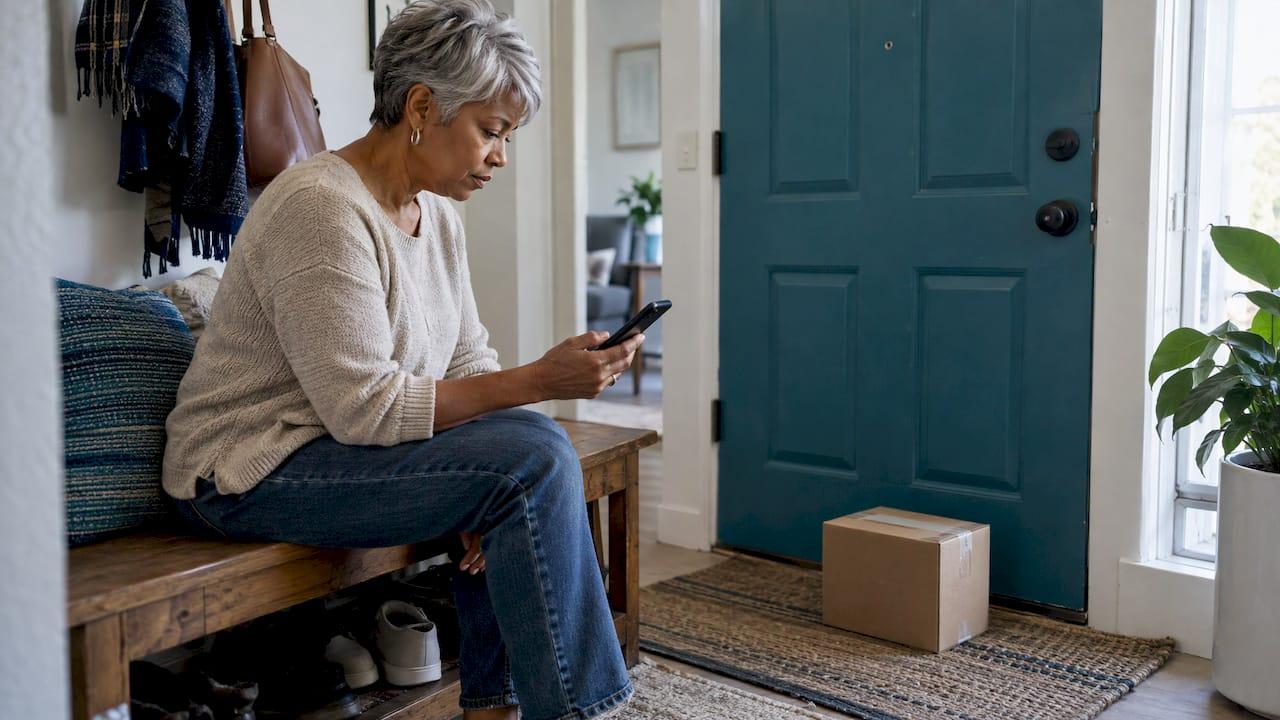
If a text says USPS is holding your package, asks for a small redelivery fee or wants you to confirm your address, treat it as a scam. USPS texts you only when you have first asked for tracking updates on a specific package, and those official tracking texts do not contain links. The same rule works for fake bank texts: do not tap, reply or call the number in the message. Go to the real app, website or phone number yourself.
This guide covers how the scams look, a 60-second check you can run on any message, what to do if you already clicked, and where to report. It is written for people who just want to know what is safe, with no tech background needed.
TL;DR
- USPS sends tracking texts only if you requested them, and official tracking texts have no links. An unexpected "package on hold" text with a link is a scam.
- USPS does not charge a fee for redelivery, so any text asking for $1 to $3 to release a package is fake.
- Never tap links, call numbers or reply in an unexpected delivery or bank text. Check the package on USPS.com or the account in your bank's app instead.
- If you clicked, contact your bank right away. If you paid or shared details, follow the recovery steps below.
- Report the text to USPIS at spam@uspis.gov and to the FTC at ReportFraud.ftc.gov, then delete it.
Table of Contents
- Will USPS ever text you?
- What fake USPS texts look like
- The 60-second check for any delivery text
- Fake bank texts: same trick, different costume
- Why these scams keep working
- What to do if you clicked or replied
- How to report a scam text
- Protect parents, grandparents and new phone users
- A free way to keep up with new scams
- FAQ
- Sources
Will USPS ever text you?
Yes, but only in one situation. USPS has a text tracking service: you text your tracking number to 28777 (2USPS), and USPS replies with the tracking number, the shipment status and instructions for stopping the messages. You started that conversation. The U.S. Postal Inspection Service (USPIS), the law enforcement arm of the Postal Service, says USPS texts customers only when they have requested tracking for a specific package.
So the question to ask is simple: did I ask USPS to text me about this package? If not, the message did not come from them, however official it looks.
A few related facts help:
- Official tracking texts do not contain links. A link is the main sign of a fake.
- USPS says it does not charge a fee for redelivery. Its scams page says so directly, so a "small fee" request is not a real USPS step.
- You do not need the text to find your package. Type the tracking number into USPS.com yourself.
What fake USPS texts look like
The technical name is smishing: phishing sent by text message. USPIS describes it as scammers impersonating agencies, banks or companies to get you to give up personal or financial information. Delivery texts are popular because almost everyone is waiting on a package at some point, especially around the holidays.
USPS's own scam alerts page lists claims that fake messages commonly make:
- Your account is suspended.
- There is suspicious activity on your account.
- There is a problem with your shipping address.
- A package is waiting for you at the post office.
The FCC adds that fake delivery notices may claim a missed delivery or ask you to update your shipping preferences. The link then leads to a website built to steal your login details or card number, or to install malware on your phone.
A typical example
A message arrives from an unfamiliar number or an email address: "USPS: Your package could not be delivered due to an incomplete address. Update within 12 hours to avoid return." A link follows. The page looks like USPS, asks for your address, then asks for a $1.99 "redelivery fee" on your credit card.
The fee is the point. The amount is small so you pay without thinking, but the scammer now has your card number, name, address and often a phone number to use in later attempts.
The 60-second check for any delivery text
Run these four steps in order. You can stop at the first one that settles it.
- Did you request texts from USPS? If you never texted a tracking number to 28777, the message is unexpected. Stop here.
- Is there a link or a payment request? Official USPS tracking texts have no links, and USPS does not charge for redelivery. Either one means a scam.
- Is there pressure? The FCC names pressure to act immediately as a warning sign. "Within 24 hours or your package will be returned" is written to rush you.
- Check the package yourself. USPIS advises anyone expecting a package to check tracking by visiting USPS.com directly. Type the address into your browser. If you have a tracking number, paste it there. If you don't, the real status will not need the text.
The FCC's advice is never to click links, call numbers or download attachments from unexpected delivery messages. Look up the company's official website or phone number independently instead of using the contact details in the message.
Common questions about the sender
Some guides say a real message always comes from a short code, and that a regular 10-digit number or an email address is a scam. That is a useful clue, but do not use it as the only test. Scammers can make messages look official, and a message that looks right can still be fake. The reliable test is whether you asked for it and whether it has a link.
Fake bank texts: same trick, different costume
Bank text scams follow the same pattern. The message says there is fraud on your account, your card has been locked, or a charge needs confirming. The Georgia Attorney General's consumer office describes bank-impersonation texts that allege fraud or account deactivation and ask for card numbers, PINs, email addresses or login details, either through a link or a phone number to call.
A bank's own guidance adds a detail many people miss. Fake texts may ask you to confirm a charge by replying yes or no, or to click through to a fake bank form. Replying, even with "no," tells the scammer your number is active, and it can trigger more attempts to get information out of you.

How to verify a bank alert safely
The FTC's text-scam guidance says not to reply to unexpected texts or click their links, and to verify a bank or company message using contact information you already know is genuine. In practice:
- Open your bank's app, or type the bank's web address yourself.
- Or call the number printed on the back of your debit or credit card.
- Look for the alert in your account. A real fraud hold will be visible there.
- Do not use any phone number, link or "reply STOP" instruction in the text.
The Georgia Attorney General gives the same advice: do not give information, click links or call numbers in such messages. Contact the institution through a number or website you know is real.
Our guide on fake bank phishing emails shows how the same tricks appear in your inbox, and the smishing scripts guide walks through six more text patterns to recognize.
Why these scams keep working
They play on ordinary moments. You are expecting something, or you worry about money, and a message gives you a quick way to fix it. Scammers send huge volumes and only need a small share of people to respond. Many variations also exist beyond packages and banks: a toll notice, a DMV message, or an unpaid bill. The same logic of a link, a deadline and a small payment applies to all of them, and the same habit defeats them: leave the message and go to the real source.
The habit matters for professionals too. Scams aimed at work accounts often arrive as billing notices, and invoice phishing scams use the same urgency and fake payment pages.
What to do if you clicked or replied
Don't panic. What you should do depends on what happened. Start with the situation that matches yours.
You tapped the link but entered nothing
USPIS says that if you have interacted with a suspicious URL, even without submitting information, you should notify your financial institution. Call the number on your card, say you opened a suspicious link, and ask whether they recommend extra monitoring. Then delete the text.
You entered card or bank details, or paid the "fee"
- Call your bank or card issuer immediately using the number on your card. Ask them to block the card and issue a new one.
- Try to reverse the payment. The FTC says to try to cancel or reverse the transaction as soon as you can.
- Watch your statements for charges you don't recognize in the following weeks. Scammers sometimes wait before using stolen card details.
- Report it (see below).
You entered a login and password
The FTC's recovery guidance says to turn on two-factor authentication on the account. Change the password on that account first, and on any other account where you used the same one. Using a unique password for each account limits the damage next time.

You gave your Social Security number
The FTC says to go to IdentityTheft.gov to report it and get a customized recovery plan. Do this the same day if you can.
You called the number in the text
Hang up and do not give any information. If you already did, follow whichever of the steps above matches what you shared. Your bank can tell you what to watch for.
How to report a scam text
Reporting takes about two minutes and helps stop the people behind the messages.
| Where | What to send | Why |
|---|---|---|
| USPIS (spam@uspis.gov) | Copied text, your name, a screenshot showing the sender's number and date, and details such as whether you clicked, lost money or shared information | For USPS-themed texts. USPIS lists exactly what to include. |
| FTC (ReportFraud.ftc.gov) | The sender's number and what the message said | The FTC takes reports of scam texts and says your report could help stop the scammers. |
| 7726 (SPAM) | Forward the text | Lets your wireless carrier flag the number. |
| Your bank | Details of any click, loss or shared information | They can block cards and watch the account. |
Take the screenshot before you delete the message, and do not tap anything in it while you copy. Once you have reported it, delete the text and block the number.
Protect parents, grandparents and new phone users
Scam texts hit people who are newer to smartphones harder, because a message that looks official feels like it must be. A few simple house rules help families:
- One rule to remember: a text that wants you to tap a link, pay a fee or confirm something is a reason to stop and check, never a reason to act.
- Agree on a person to ask. Tell a relative that forwarding a screenshot of any odd message is always fine and never embarrassing.
- Show the real route. Help them bookmark USPS.com and save the bank's phone number on the contacts list under the bank's name.
- Remind them that no one gets in trouble for ignoring a text. If a package is real, it will arrive or a notice will be left at the door.
Our scam warning signs checklist is a short, plain-language guide you can share with a family member.
A free way to keep up with new scams
Scammers change their wording often, so one article will not cover everything coming next. Scruteon is a free newsletter that sends one or two short, plain-language emails a week on current scams and the warning signs that go with them, covering romance scams, phishing, tech support fraud and elder fraud. It includes curated resources for reporting scams and checking suspicious links, and you can write to us for personalized advice on a message you are unsure about. You don't need any technical knowledge to follow it. Subscribe on the Scruteon home page.

It is free for everyone, with no paywall, so you can pass it along to parents, friends or coworkers.
FAQ
Does USPS send text messages about missed deliveries?
Only if you signed up for tracking updates for a specific package, for example by texting your tracking number to 28777. Those messages do not contain links. An unrequested text about a missed delivery with a link is a scam.
Does USPS charge a fee to redeliver a package?
No. USPS says it does not charge a fee for redelivery. Any text that asks you to pay $1 to $3 to release or reschedule a package is not from USPS.
What should I do if I get a fake bank text?
Don't reply, click or call the number in the message. Open your bank's app or call the number on the back of your card to see whether there is a real alert. Then report the text to the FTC and delete it.
I clicked a link in a delivery text. Am I in trouble?
Not necessarily, but act quickly. USPIS says to tell your bank even if you did not enter anything. If you entered card details, ask your bank to block the card. If you entered a password, change it and turn on two-factor authentication.
How do I report a fake USPS text?
Email spam@uspis.gov with the copied text, a screenshot showing the sender's number and the date, and what happened if you clicked or lost money. You can also report it at ReportFraud.ftc.gov.
Sources
- Smishing: Package Tracking Text Scams, USPIS
- Text Tracking FAQs, USPS
- Scams & Scheme Alerts, USPS
- How to Avoid Package Delivery Scams, FCC
- FTC consumer alert regarding text scams, New Hampshire Banking Department
- Order Confirmation and Fraudulent Transaction Scams, Georgia Attorney General
- How to Identify & Avoid Bank Text Scams, City National Bank
- What To Do if You Were Scammed, FTC
- If I sent money to a scammer, what should I do? FTC
- How to Recognize and Report Spam Text Messages, FTC
- Invoice Phishing Scams: How to Spot Them and Stop Them
Recommended
- DMV Text Scam? 6 Step State Backed Checklist to Verify and Recover
- Bank Phishing Email: How to Spot a Fake and What to Do
- 6 Smishing Scripts Phone Users Must Recognize and a 5 Step Fix
- Spot Scam Warning Signs in 5 Minutes, Verify and Report (U.S.)
The information in this AI-assisted-generated article is for educational purposes. Scam tactics change fast, and we cannot guarantee that this information is always complete or up to date.
By reading this article, you agree that Scruteon is not responsible for any financial losses, fraud, or damages that occur if you rely on this content. This is not professional financial or legal advice. If you suspect you are a victim of a scam, please contact your bank or local law enforcement immediately.