
If someone contacted you first with a promise to erase your debt fast, or asked for money before doing anything, treat it as a scam until proven otherwise. Do not pay, do not share your bank or Social Security information, and don't confirm any debt details. Hang up, request written validation, and call your original creditor using the number on your last statement, not a number the caller gave you.
TL;DR:
- Legitimate debt relief companies do not demand upfront fees and typically operate over several weeks or months, not in a single rushed call.
- Scam callers often impersonate authorities or trusted brands, use caller ID spoofing, and cite real account details to appear credible.
- Valid debt validation must be provided in writing within five days, and consumers have 30 days to dispute the debt in writing during which collection activity must pause.
- Payments made through gift cards, cryptocurrency, or wire transfers are nearly impossible to recover, so these methods are a major red flag indicating scam activity.
- Filing disputes and complaints promptly and using verified contact information can stop scams, and proven legitimate options involve nonprofit counseling or licensed settlement firms charging after results.
Table of Contents
- What Are the Warning Signs of a Debt Relief Scam?
- How Do Debt Relief Scams Actually Work?
- How Do You Verify a Debt Claim Before Paying Anything?
- Why Are Certain Payment Methods a Red Flag?
- What Legitimate Debt Relief Options Actually Exist?
- What Should You Do if You Were Targeted or Already Paid?
- How Can You Stay Ahead of the Next Scam Attempt?
- Worried About a Call You Just Got? Get a Free Second Opinion
- Where to Verify Debt Collection Rules and File Complaints
- Sources
- FAQ
What Are the Warning Signs of a Debt Relief Scam?
A debt relief scam almost always shows at least two of these signs at once, and any single one is reason enough to hang up.
- Unsolicited contact by phone, text, or email claiming to already know about your debt
- Upfront or "processing" fees requested before any settlement work happens
- Pressure to act immediately, often with a countdown or "today only" deadline
- Payment demands by gift card, cryptocurrency, or wire transfer
- Guarantees to erase debt entirely or repair your credit score overnight
- Refusal to send anything in writing when you ask for details
The FTC's consumer advice on fake and abusive debt collectors lists unsolicited contact, refusal to provide written information, threats, and pressure to pay immediately as the clearest indicators of a fraudulent operation. Legitimate debt relief simply doesn't move at gunpoint speed. As the FTC's own guidance on getting out of debt makes clear, real settlement and counseling programs take weeks or months of consumer participation, not a single rushed phone call.
Pro Tip: If a caller won't wait five minutes for you to write down what they said, that hesitation alone tells you everything.
How Do Debt Relief Scams Actually Work?
Scammers rarely improvise. Most run a script built around three tactics that make the pitch feel real.
- Impersonation. Callers pose as the IRS, your bank, or an actual known debt relief brand, sometimes emailing fake letterhead or forged settlement documents to look official.
- Caller ID spoofing. Your phone shows a local number or one matching your own area code, a trick known as neighbor spoofing, designed to make you pick up.
- Data-driven targeting. Scammers buy or scrape leaked account information so they can cite a real balance or lender name, which makes the pitch sound informed rather than random.
Robocall volume tied to fake debt relief pitches has climbed as scammers refine these impersonation tactics, according to AARP's reporting on debt relief scams. Some operations don't stop after the first payment. If you already sent money once, expect a follow-up call demanding more money to "recover" what you lost. That second ask is its own recovery scam, and it's one of the fastest ways initial losses multiply.
How Do You Verify a Debt Claim Before Paying Anything?
Federal rules give you real leverage here, not just caution.
- Demand a written validation notice. Debt collectors must send one within five days of first contact, listing the creditor's name, the amount owed, and instructions for disputing the debt, under CFPB regulations governing debt validation.
- Use your own 30-day window. You have 30 days from receiving that notice to dispute the debt in writing, and collectors must pause collection activity while your dispute is pending.
- Contact the original creditor directly, using a phone number from your own account statement or credit report, never one the caller supplied.
- Pull your credit report to confirm the debt exists and matches the amount claimed.
- Ask direct questions: Who is the original creditor? What is the account number? Can you send this in writing to my mailing address?
Pro Tip: Send your dispute letter by certified mail with a return receipt. That paper trail is what protects you if this ends up in court.
Why Are Certain Payment Methods a Red Flag?
The payment method a company insists on tells you almost everything about whether they're legitimate.
- Gift cards, cryptocurrency, and wire transfers are scam staples because none of them can be reversed or traced once sent.
- Prepaid debit cards work the same way; once the code is read to someone over the phone, that money is gone.
- **Legitimate debt relief firms and collectors accept checks or verified online payment portals. You can independently confirm that portal's URL matches the company's real domain.
- Untraceable payment methods make recovery nearly impossible, according to Forbes Advisor's analysis of debt relief payment red flags, which is exactly why scammers prefer them.
If you already paid through one of these channels, contact your bank or card issuer immediately. Some wire transfers can be flagged within hours if you report fast enough, though the window is narrow.
What Legitimate Debt Relief Options Actually Exist?
Real help exists, and it splits into two very different categories.
Nonprofit credit counseling organizations, often affiliated with the National Foundation for Credit Counseling, typically offer a free or low-cost consultation and can set up a debt management plan with lower fees and one predictable monthly payment to creditors. For-profit debt settlement companies work differently: they negotiate lump-sum settlements with creditors, and legitimate firms charge fees of 15% to 25% of your enrolled debt, collected only after a settlement is reached and you've made at least one payment toward it, according to CBS News's breakdown of debt relief company fees.
- Settlement can take two to four years and often tanks your credit score temporarily.
- Bankruptcy is worth discussing with a licensed attorney when debt is unmanageable regardless of settlement.
- Any company demanding fees before results is operating outside the law, full stop.
What Should You Do if You Were Targeted or Already Paid?
Moving fast limits the damage and gives investigators something to work with.
- Stop all contact with the suspected scammer and send a cease-communication letter if calls continue.
- File a dispute in writing within your 30-day window if you haven't already, and keep a copy.
- Report it to ReportFraud.ftc.gov, which feeds directly into FTC enforcement data.
- File a complaint with the CFPB if a collector violated validation or disclosure rules.
- Contact your state attorney general's consumer protection office, since many run their own investigations separate from federal agencies.
- Report suspected internet-based fraud to the FBI's IC3 if contact happened online.
- Call your bank or card issuer to request a reversal; recovery odds are decent for card charges, poor for wires, and close to zero for gift cards or crypto.
In 2025, the FTC shut down an operation that had defrauded consumers of an estimated $100 million through fake debt relief promises, a reminder that these complaints do lead somewhere. If a fraud settlement or restitution fund ever opens from an enforcement action like this, resources like ClaimCow's guide to consumer fraud settlements explain how those payouts typically work.
How Can You Stay Ahead of the Next Scam Attempt?
Spotting one scam call doesn't mean the next one won't slip past you, especially when scammers rotate scripts every few months. A quick reference habit helps more than memorizing a single list of red flags.
The newsletter sends free, short alerts covering active scams, including debt collector impersonation, phishing, and elder fraud, written to be quickly understood. Pairing that with a five-minute warning-sign checklist gives you a repeatable way to triage a suspicious call the moment it happens, rather than scrambling to remember advice you read once.
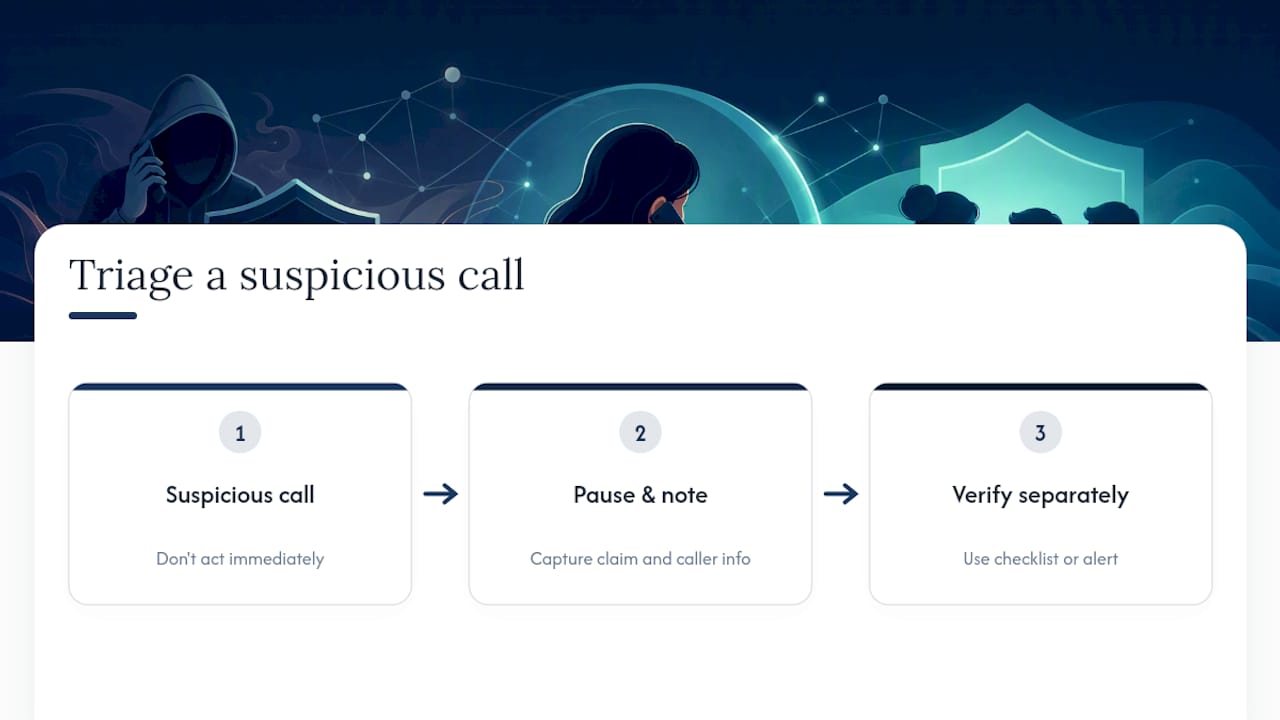
Pro Tip: Bookmark one verification checklist and reuse it every time. Scam scripts change; the verification steps almost never do.
Worried About a Call You Just Got? Get a Free Second Opinion
Government hotlines are built for filing complaints after the fact. Scruteon fills the gap before that, a free way to ask "is this real?" the moment something feels off, without wading through a federal agency's intake form first.

The newsletter sends plain-language alerts on active scams, including the debt collector impersonation tactics covered above, so you recognize the next one before it gets far. If you're staring at a suspicious text or a too-good settlement offer right now, you can ask Scruteon for a free, quick check on whether it looks legitimate. Scruteon doesn't sell debt settlement services or negotiate with creditors. It's strictly a free resource for spotting fraud and pointing you toward the right next step. Start by visiting Scruteon's free scam prevention guide and subscribing before the next call comes in.
Where to Verify Debt Collection Rules and File Complaints
- FTC debt relief and credit repair scams — official red flags and reporting guidance
- CFPB debt validation regulations — your legal rights during a dispute
- National Foundation for Credit Counseling — verified nonprofit counselors
- Your state attorney general's office — local complaint filing and investigations
Sources
- FTC halts illegal debt-relief operation that impersonated businesses and government, harming consumers (press release)
- Fake and abusive debt collectors — FTC consumer advice
- CFPB — Regulation text re: validation of debts (legal requirements)
FAQ
Is There a Legitimate Debt Relief Program?
Yes. Nonprofit credit counseling agencies affiliated with the NFCC offer free or low-cost consultations, and legitimate for-profit settlement firms charge 15% to 25% of enrolled debt only after settling and after you've made a payment. Any company asking for money upfront is not one of them.
Why Do I Keep Getting Spam Calls About Debt Relief?
Scammers use auto dialers and caller ID spoofing to blast thousands of numbers cheaply, often buying leaked account data to make the pitch sound personalized. Robocall volume tied to fake debt relief offers has grown as scammers refine these tactics, according to AARP's reporting on debt relief scams.
Is Debt Relief Really Worth It?
For real settlement or nonprofit debt management, it can meaningfully lower what you owe or simplify payments, though it typically takes years and can temporarily hurt your credit score. It's only worth it when the company is verified, charges no upfront fees, and puts everything in writing.
Is There a Debt Collection Scam Going Around?
Scam debt collector calls remain common, with tactics ranging from impersonating the IRS to threatening arrest over debts that may not even exist. The FTC's guide to fake and abusive debt collectors confirms these threats are illegal, since real collectors cannot threaten jail time for unpaid consumer debt.
Recommended
- Spot Scam Warning Signs in 5 Minutes, Verify and Report (U.S.)
- No Letter? Hang Up: 2026 U.S. Rules to Spot IRS Scam Calls
- Prevent Identity Theft: 3 Actions That Block Most Takeovers
- Stop Census Scams Targeting U.S. Households: Never Give Your SSN or Money
The information in this AI-assisted-generated article is for educational purposes. Scam tactics change fast, and we cannot guarantee that this information is always complete or up to date.
By reading this article, you agree that Scruteon is not responsible for any financial losses, fraud, or damages that occur if you rely on this content. This is not professional financial or legal advice. If you suspect you are a victim of a scam, please contact your bank or local law enforcement immediately.