
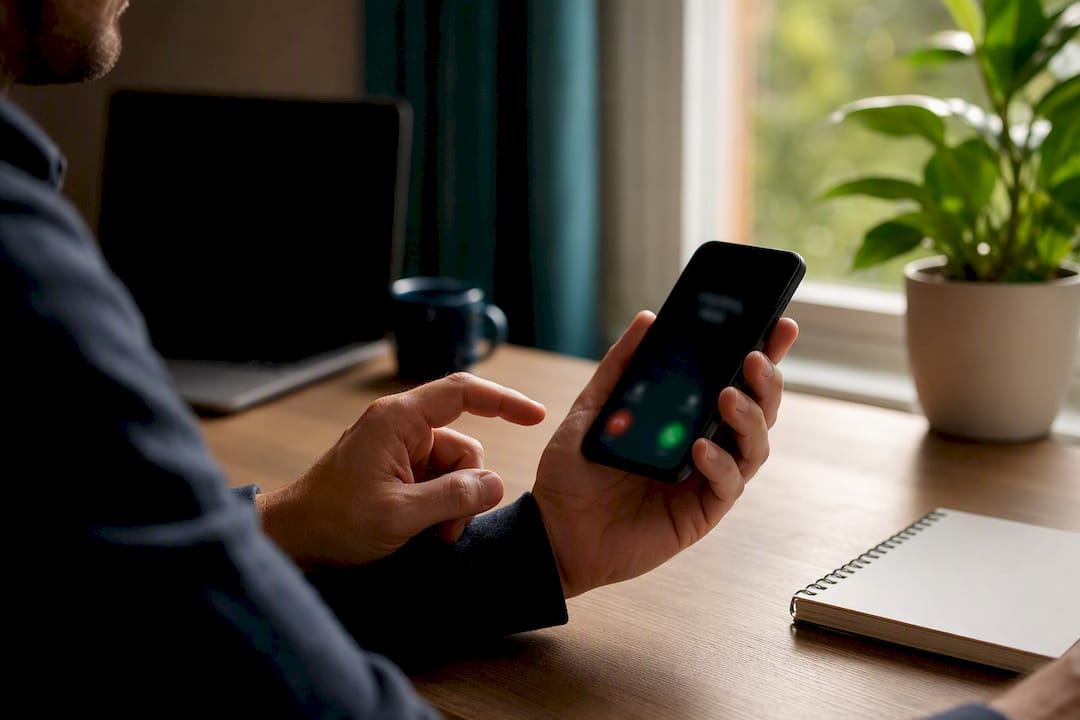
A missed call that rings once and cuts off before you can answer is the signature of the one ring scam, also known by its original name, Wangiri, Japanese for “one ring and cut.” The single thing to do is simple: don’t call back. Returning the call can route you to a premium international number that racks up connection fees and steep per-minute charges before you even realize what’s happening.
Both the FCC and the FTC have published direct warnings about this scheme, and for good reason: it’s cheap to run and it still works. Scruteon tracks scams like this one and sends out plain-language alerts so you’re not caught off guard.
Before you do anything else with an unfamiliar missed call, remember these three things:
-
Don’t call back an unknown number, especially one you don’t recognize with an unfamiliar area code.
-
A single ring that disconnects on its own is the scam’s calling card, not a sign someone urgently needs you.
-
If you’re unsure whether a number is legitimate, look it up first instead of dialing it.
Key Takeaways
The one ring scam works only if you call back, so the single most effective defense is refusing to return calls from unfamiliar numbers.
| Point | Details |
|---|---|
| Never call back | Unknown missed calls that ring once and disconnect are the scam’s core tactic; returning the call is what triggers charges. |
| Watch for the “+” sign | A plus sign before the area code when dialing back signals an international connection; hang up immediately. |
| Block international calls | Ask your carrier to block outgoing international and premium-rate calls if you don’t use them. |
| Report and dispute fast | Contact your carrier first, then file free complaints with the FCC and FTC if charges aren’t resolved. |
| Get ongoing alerts | Scruteon’s free newsletter and “Is this a scam?” advice feature help you evaluate suspicious calls as they happen. |
Where to Verify Guidance and File Complaints
-
The FCC’s one ring scam guide explains the scheme and links to its complaint portal.
-
The FTC’s consumer alert covers reporting steps and billing checks.
-
Your carrier’s own complaint or fraud line is the fastest route to disputing charges directly.
Table of Contents
How the One Ring Phone Scam Actually Works
Scammers behind Wangiri operations don’t call you by hand. They use auto-dialers that blast out thousands of calls in short bursts, each one ringing your phone exactly once before disconnecting automatically. The scam depends on volume: most people ignore a missed call, but enough will get curious and call back that the scheme stays profitable.
Here’s the sequence that plays out once curiosity wins:
-
You see a missed call from a number you don’t recognize, often with an area code that looks domestic but isn’t.
-
You call back, expecting a wrong number or a real person on the other end.
-
The call connects to an international premium-rate line, and the meter starts running the second the connection goes through.
-
A recorded message, hold music, or a scripted voice keeps you on the line as long as possible, since every extra second adds to the bill.
Pro Tip: Check your phone’s screen when you dial back. If a “+” shows up before the area code, you’re calling an international number, and you should hang up immediately.
The FCC’s own scam glossary documents how caller ID spoofing lets scammers disguise a foreign number so it looks like a normal domestic call. That’s the trick that makes this scam so effective: nothing about the missed call looks obviously foreign until you’ve already dialed back.
Warning Signs and the Area Codes Scammers Favor
A handful of area codes show up again and again in one ring scam reports, mostly because they resemble familiar three-digit U.S. codes but actually belong to international jurisdictions in the Caribbean. The FCC has flagged 268, 284, 473, 649, 767, 809, 829, 849, and 876 as codes commonly abused this way. Spoofing means the actual origin can be hidden or faked entirely, so treat any unfamiliar number with caution rather than memorizing a fixed list.
A few behavioral cues tend to repeat across reports:
-
The call rings once, maybe twice, then disconnects before voicemail even picks up.
-
Any voicemail left behind is vague, urgent, or asks you to call back “right away.”
-
Calls cluster late at night or early morning, when people are less likely to check the number carefully before dialing back.
-
The message creates pressure, implying a missed delivery, an emergency, or an account problem.
If you do get billed, the charges usually show up as international calling fees, premium-service charges, or toll-calling line items, exactly the kind of entries the FTC recommends scanning for line by line every month, not just after a suspicious call.
Steps to Avoid Falling for a Ring Scam
Prevention here isn’t complicated, but it does require a little discipline the first time an unknown number flashes on your screen.
-
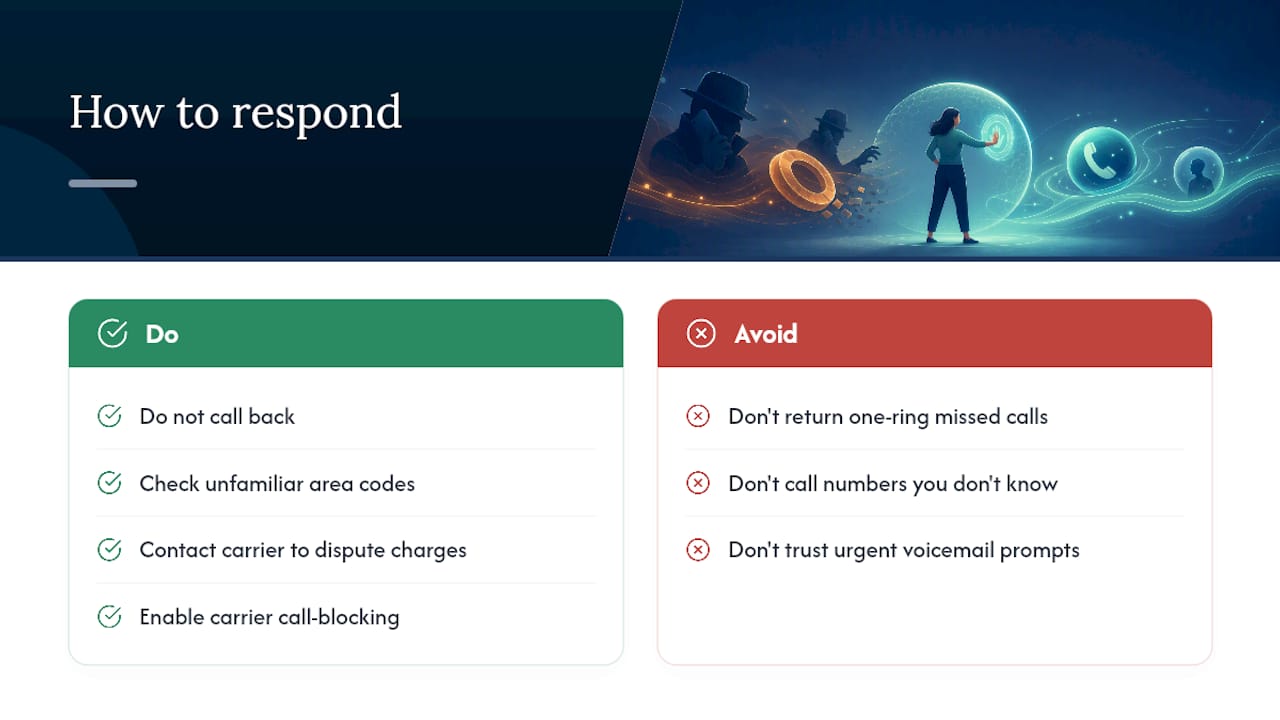
Never call back an unrecognized number. This is the rule that stops the scam cold; if you don’t return the call, there’s no charge to rack up.
-
Search the number online before doing anything else. A quick search often turns up other people reporting the same missed-call pattern.
-
Block the number and use your carrier’s call-blocking tools. Most carriers offer free spam and scam-call filtering you can turn on in minutes.
-
Ask your carrier to block outgoing international calls if you never make them. This closes the door entirely on accidental premium billing.
-
Verify any legitimate caller through an independent number, not one left in a voicemail or text. Security guidance from the FCC is consistent on this: find the number yourself from an official website or billing statement.
-
Use your phone’s built-in settings to silence unknown callers, sending anything not in your contacts straight to voicemail.
Pro Tip: If you slip up and call back before thinking, watch the dial screen. A “+” before the number means you’re connecting internationally. Hang up before it rings through.
What to Do If You Already Called Back
If you’ve already returned the call, the priority shifts from prevention to damage control, and speed matters.
-
Hang up right away if you’re still connected, and jot down the number and the time of the call.
-
Check whether a “+” appeared on your screen when you dialed back; that confirms an international connection was made.
-
Stop making any further callbacks to that number, even if a message urges you to try again.
-
Contact your carrier as soon as possible to dispute the charges and ask about credits or blocking options going forward.
-
If your carrier won’t resolve it, file a complaint with the FCC and with the FTC, both of which accept complaints at no cost.
-
Include the phone number, the date and time of the call, and a copy of the disputed bill line when you file, since itemized records tend to speed up resolution.
-
If you gave out any personal information during the call, consider monitoring your accounts and credit for unusual activity afterward.
How Scruteon Backs Up This Guidance
Scruteon publishes a free scam prevention guide and sends one to two newsletter posts a week covering scams like this one as they evolve, from Wangiri calls to phishing texts. If a call or message has you second-guessing yourself, Scruteon’s free “Is this a scam?” advice feature lets you ask directly rather than gamble. This piece was put together by Winston, a Scruteon content creator focused on breaking down scam tactics into steps anyone can actually use.
What the Conventional Advice Gets Wrong
Most write-ups on the one ring scam stop at “don’t call back,” as if the hard part is knowing the rule rather than acting on it in the moment. The real gap is timing: curiosity kicks in within seconds of seeing a missed call, long before anyone stops to remember an article they read once. That’s why the “+” sign trick matters more than most guides give it credit for. It’s a fail-safe for the exact moment willpower fails, giving you a visual cutoff even after you’ve already made the mistake of dialing back.
The other place conventional advice falls short is treating this as a one-time event instead of an ongoing exposure. Carriers can block outgoing international calls entirely, yet almost nobody asks for that setting unless they’ve already been burned once. If you don’t regularly call outside the country, there’s no real downside to requesting the block today. Prioritize that single call to your carrier over memorizing a list of suspicious area codes, since spoofing makes any fixed list temporary anyway.
A Free Way to Stay Ahead of Scams Like This
You don’t have to wait for a suspicious call to figure out whether it’s dangerous. Scruteon’s free newsletter sends one to two short alerts a week covering scams like Wangiri as they shift and spread, so you’re not relying on memory alone when a strange number shows up.
If a call, text, or voicemail already has you uneasy, use Scruteon’s free advice feature to ask directly whether it looks like a scam. It’s built for exactly this kind of moment, when you need a fast, plain answer instead of another search through forums. Sign up for the Scruteon newsletter and get the next alert before the next scam call ever reaches your phone.
Frequently Asked Questions
What is the one ring scam? It’s a scheme where automated dialers place calls that ring once and disconnect, hoping you’ll call back into a premium international number that charges you connection and per-minute fees.
Why is it called Wangiri? Wangiri is Japanese for “one ring and cut,” describing the automated calling pattern where the call terminates after a single ring.
How do I know if a missed call is part of a ring scam? Watch for an unfamiliar area code, a call that disconnects after one ring, and any voicemail pressuring you to call back quickly.
Will calling back always result in charges? Not every callback leads to a charge, but international premium-rate numbers can bill connection and per-minute fees the moment the call connects, so it’s not a risk worth taking.
What should I do if I’ve already been charged? Contact your carrier immediately to dispute the charge, then file a complaint with the FCC or FTC if it isn’t resolved.
Can I block these calls before they happen? Yes. Most carriers offer free call-blocking tools, and you can request that outgoing international calls be blocked entirely if you don’t make them.
The information in this article is for educational purposes only. Scam tactics change fast, and we cannot guarantee that this information is always complete or up to date.